Downspout installation in Grapevine, TX is the part of the gutter system that decides whether all that roof water actually leaves your property or just gets dumped next to your foundation. Gutters collect the water. Leaders deliver it somewhere safe. When drainage outlets are too few, too small, clogged, or pointed at your slab, the gutters might as well not exist.
This page covers downspout sizing and placement, extensions, splash blocks versus buried drains, and the drainage realities of Texas clay soil and slab foundations. It's the least glamorous part of the gutter system and one of the most important.
What Downspouts Do (And Why They Fail)
A downspout is a simple thing: a vertical channel that carries water from the gutter to the ground. But the physics matter. A typical Grapevine roof sheds thousands of gallons in a single spring storm. Every gallon has to pass through a drain pipe, and the vertical drain has to handle the peak flow, not the average.
Downspouts fail in predictable ways:
Too few for the roof area. The most common problem. A long gutter run with one leader at the end can't drain fast enough in a downpour, so water backs up and spills over. The rule of thumb is one leader for every 30 to 40 feet of gutter, but roof valleys and large planes that concentrate water need more.
Too small for the volume. Standard residential downspouts are 2x3 inches. They work for normal conditions. But a 6-inch gutter system, a steep roof, or a section that collects a large roof area needs 3x4 downspouts. A big gutter feeding a small drainage outlet is a bottleneck by design.
Clogged. Shingle grit, oak catkins, and decomposed leaf matter settle in downspout elbows. A drainage outlet can look perfectly fine from outside while being completely blocked inside. The symptom is a gutter that overflows even though it's clean.
Crushed or disconnected. Mowers, trimmers, and kids' toys crush the bottom sections. Elbows pull apart over time. A disconnected downspout pours water straight down next to the foundation, which is worse than no drain pipe at all because it concentrates the flow.
Discharging too close to the house. This is the big one in Grapevine. A drain pipe that ends 6 inches from the foundation dumps the entire roof's water into the worst possible spot. Everything in this page comes back to getting water away from the slab.
Call (817) 566-8258
Downspout Sizing: 2x3 vs. 3x4
Size is the first decision, and it's driven by how much water each downspout must handle.
2x3 inch downspouts are the residential standard. Two inches by three inches in cross-section, they handle normal roof sections on 5-inch gutter systems. If your current 2x3 downspouts keep up in heavy rain, they're correctly sized.
3x4 inch downspouts move roughly twice the water. They're the right choice for 6-inch gutter systems, steep roofs that shed water fast, long runs with a single vertical drain, and any spot where you've watched water back up and overflow. The larger opening also clogs less, because debris that would plug a 2x3 passes through a 3x4.
The matching rule: Size the leader to the gutter and the roof, not to what's cheapest. A 6-inch gutter with 2x3 downspouts is like a six-lane highway narrowing to two lanes at the exit. The system is only as good as its narrowest point.
When to upsize: If your gutters overflow at the downspout end during heavy rain while the rest of the run is fine, the leader is undersized or clogged. If it's clean and still can't keep up, it needs to be bigger or it needs company: a second drainage outlet on the same run.

Downspout Placement: Where They Go and Why
Placement follows water, not convenience. Here's how it works:
Follow the roof's drainage. Water concentrates at valleys where two roof planes meet, at the bottom of large roof sections, and anywhere the architecture funnels flow. Drainage outlets go where the water is, which means valleys almost always need one nearby.
Respect the 30-to-40-foot rule. No section of gutter should run more than about 40 feet to reach a downspout. Longer runs need a drain pipe at each end or one in the middle. Long runs to a single vertical drain also need more pitch, which looks wrong and still drains slowly.
Keep them away from walkways and doors. A drain pipe discharging across a sidewalk creates a slip hazard and an ice-free but algae-slick walkway. Plan discharge points where water can flow across lawn, not across concrete you walk on.
Think about the whole property's drainage. The downspout's job doesn't end at the elbow. Water needs a path away from the house that doesn't pool in a low spot, flood a neighbor, or run back toward the foundation. Walk the property during rain sometime. You'll learn more in ten minutes than any diagram can teach.
Aesthetics matter too. Vertical drains are visible. Matching the gutter color, keeping runs plumb and tight to the wall, and routing around architectural features cleanly is the difference between an installation that looks intentional and one that looks improvised.
Getting Water Away From the Foundation: Extensions
This is where Grapevine's clay soil makes downspout work critical. The goal is simple: roof water should end up well away from the slab. Here are the options, from simplest to most involved:
Splash Blocks
What they are: Simple concrete or plastic blocks placed under the outlet, angled to direct water away from the house.
Pros: Cheap, easy, better than nothing.
Cons: They only move water a couple of feet, they shift over time, and in heavy rain they get overwhelmed. On clay soil, two feet isn't enough. Splash blocks are a starting point, not a solution.
Above-Ground Extensions
What they are: Additional downspout sections or flexible extensions that carry water 4 to 10 feet from the house across the lawn.
Pros: Effective, affordable, easy to adjust. This is the sweet spot for most Grapevine homes.
Cons: They're visible, mowers hit them, and they can look cluttered. Hinged extensions that flip up for mowing solve the mower problem.
Buried Drain Lines
What they are: Solid PVC pipe buried underground, running from the drainage outlet to a discharge point far from the house: a pop-up emitter in the lawn, a drainage swale, or the street where local rules allow.
Pros: Invisible, mower-proof, and moves water the farthest. The best long-term solution for homes with drainage problems or for anyone who wants the cleanest look.
Cons: More involved to install. The line needs proper slope to drain, the outlet needs to stay clear, and roots can invade over time. In clay soil, the trench needs care so it doesn't become a water channel itself.
Pop-Up Emitters
What they are: A capped outlet at the end of a buried line. Water pressure pushes the cap up and flows out onto the lawn; when flow stops, the cap closes, keeping debris and critters out.
Pros: Clean look, no open pipe for kids or mowers to find, keeps the line mostly sealed.
Cons: The emitter needs a spot where water can spread without pooling. On flat clay lots, grading around the emitter matters.
The Grapevine recommendation: For most homes, above-ground extensions of at least 4 to 6 feet solve the problem affordably. If you've had foundation movement, persistent soggy soil near the slab, or you just want it done permanently, buried lines to a pop-up emitter are the upgrade. Either way, the days of the downspout ending at the foundation wall need to end.
Call (817) 566-8258
Texas Clay Soil and Slab Foundations: Why This Matters So Much
If you take one thing from this page, take this. Grapevine's expansive clay soil is the reason drain pipe drainage isn't a detail, it's a structural issue.
Expansive clay absorbs water and swells. It dries and shrinks. Around your slab foundation, uneven moisture means uneven movement: one corner swells while another stays dry, and the slab flexes. Over time, that flexing cracks slabs, sticks doors, cracks brick veneer, and creates the foundation repair bills that North Texas is famous for.
Your roof collects an enormous amount of water. Without downspouts moving it away, all of it lands in the few feet of soil next to your foundation, exactly where moisture needs to stay consistent. Gutters and leaders are, in a very real sense, foundation protection equipment.
The consistency principle: Foundations don't need dry soil. They need consistent soil moisture all the way around. Vertical drains that dump water in one spot while the other side stays dry create the differential movement that causes damage. Every drainage outlet should discharge away from the house, and the discharge pattern should be reasonably even around the perimeter.
What to watch for: Doors that stick seasonally, diagonal cracks in brick veneer, gaps between the slab and the soil in dry months, and soil that stays soggy near the foundation for days after rain. These are foundation moisture problems, and gutter drainage is always part of the conversation.
Underground Drainage Basics
When downspouts connect to buried lines, a few principles keep the system working:
Solid pipe, not corrugated, for the main run. Corrugated flexible pipe is cheap and easy, but its ridges catch sediment and it crushes under soil load. Solid PVC (schedule 40 or SDR 35) stays smooth and round for decades. Use corrugated only for short, accessible sections if at all.
Slope matters. Buried lines need consistent fall toward the outlet, about an eighth of an inch per foot minimum. Bellies in the line, where water sits, collect sediment and eventually clog. In clay soil, the trench bottom needs to be firm and even.
Keep roots out. Tree roots seek water, and a drain line is a water source. Keep lines away from large trees where possible, and use solid glued joints that roots can't penetrate as easily as corrugated seams.
Maintain the outlet. The discharge point is where clogs happen: grass grows over pop-up emitters, mulch buries outlets, sediment settles. Check outlets yearly. A buried system with a blocked outlet backs water up to the house, defeating the entire purpose.
Cleanouts help. An accessible cleanout or catch basin at the downspout connection lets you flush the line and catch debris before it enters the buried run. It's a small addition that makes long-term maintenance dramatically easier.
When a buried line clogs anyway. Sediment and root hairs eventually slow even a well-built line. An underground gutter drain cleaning service can jet or snake the run from the cleanout, and a camera inspection finds crushed sections without digging up the whole yard. If your downspouts bubble at the base during rain, the buried line is asking for that visit.
Common Downspout Problems and Fixes
Problem: Gutter overflows near the leader in heavy rain. The downspout is undersized, clogged, or there's only one where two are needed. Flush it first. If it's clear and still can't keep up, upsize to 3x4 or add a second drain pipe.
Problem: Water pours out of a separated elbow. Elbows work loose over time, especially at the bottom where mowers bump them. They get reattached and screwed, not just pushed back together. A bead of sealant at the joint keeps it watertight.
Problem: Drainage outlet pulls away from the wall. Straps loosen or were spaced too far apart. New straps screwed into solid material, spaced every 6 to 8 feet, fix it permanently. If the strap pulled out of rotted wood, the wood needs attention first.
Problem: Green algae on the siding below the downspout. Water is escaping somewhere above: a leaking elbow joint, a cracked section, or splash-back from a too-short extension. Find the leak, fix the joint, extend the discharge.
Problem: Mosquitoes breeding in the drain pipe. A clogged downspout holds standing water. Clear the clog and the breeding site disappears. This is another reason downspout flushing belongs in every gutter cleaning.
Problem: Erosion trench under the vertical drain outlet. Concentrated discharge digs into soil and mulch. An extension, splash block, or buried line spreads the flow. On clay soil, that trench also channels water toward the foundation, so fix it promptly.
Call (817) 566-8258
Downspout Installation in Grapevine, TX: Service Areas
For downspout installation in Grapevine, TX, Grapevine Gutter Pros serves the 76051 and 76099 ZIP codes, including:
- Historic Downtown Grapevine and Main Street
- Dove Crossing
- Silver Lake Estates
- Timberline
- The neighborhoods around Grapevine Lake
- Nearby: Colleyville, Southlake, Coppell, Euless, Flower Mound
Why Downspouts Are Really About Your Foundation
Gutters get all the attention, but downspouts do the critical last ten feet of the job: deciding where thousands of gallons of roof water end up. In North Texas, that decision matters more than in most places, because of what sits under our houses — expansive clay soil and slab foundations.
Texas clay is a sponge with a memory. It swells when it soaks and shrinks when it dries, and that seasonal movement stresses slab foundations year after year. When a leader dumps water right at the foundation — the situation homeowner forums describe perfectly as water "sitting right against the home" — the soil beside the slab stays saturated while the soil a few feet away dries out. That uneven moisture is exactly what causes differential movement: one part of the slab stays put while another shifts.
As one contractor put it in a line homeowners love to repeat: nobody budgets for a foundation crack. Everybody can budget for proper drainage. The fix is straightforward. Downspouts should discharge at least four to six feet from the foundation; buried drain lines can carry water ten to fifteen feet out or daylight it at a slope. Above-ground extensions and splash blocks work when the grading cooperates. Buried solid pipe with a pop-up emitter or catch basin works when it doesn't, and it keeps the yard looking clean.
Watch for the warning signs that your discharge points are failing: water pooling at the base of a drainage outlet after storms, mulch or soil washed away in a fan pattern, white mineral staining on the slab edge, or interior doors that start sticking after heavy rain seasons. Any of these means water is winning the argument with your foundation, and the vertical drain layout is the first place to look.
A gutter system that ends two feet from the house is a gutter system doing half its job. When we set downspouts in Grapevine, the question is never just "does water leave the gutter" — it is "does water leave the property's foundation zone." Call (817) 566-8258 if your leaders are dumping too close to the house.
Rain Chains: A Decorative Downspout Alternative
Some Grapevine homeowners ask about replacing a front-entry downspout with a rain chain. Copper rain chains for gutters guide water down a series of cups or links, and they look genuinely good doing it, especially into a rain garden or a gravel basin. They are a fair choice for a porch corner or a short eave run.
Be honest about the limits, though. In a Texas downpour, a chain splashes and swings where a downspout delivers every drop to the drain. Chains also move far less water than a 3x4 downspout. Use them where the roof area is small and the look matters, and keep real downspouts where the water volume is serious.
More Services

Gutter Repair
Leaks, sagging runs, and storm damage fixed at the source.
Gutter Repair in Grapevine, TX →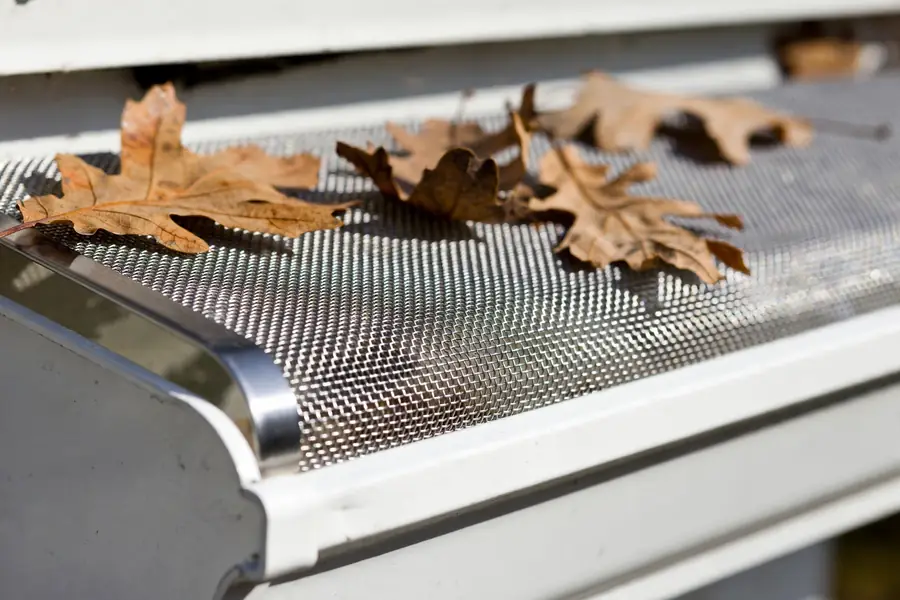
Gutter Guards
Mesh systems matched to Texas oak leaves and pine needles.
Gutter Guards in Grapevine, TX →Frequently Asked Questions
Direct answers to common questions.
How many downspouts does my house need?+
Plan on one drain pipe for every 30 to 40 feet of gutter, with extra drainage outlets wherever roof valleys concentrate water. A long run with a single drain pipe at the far end will overflow in heavy rain no matter how clean the gutters are. When in doubt, more vertical drains beat bigger gutters.
What size downspout is best?+
Standard 2x3 downspouts suit normal roof sections on 5-inch gutters. Step up to 3x4 where a downspout serves a large roof area, a steep roof, or a 6-inch gutter system. The larger size also clogs less. Match the leader to the water volume, not to the lowest cost.
How far should downspouts extend from the house?+
At least 4 to 6 feet from the foundation as a practical minimum, farther is better. In Grapevine's expansive clay soil, water dumped next to the slab causes the swell-shrink cycle that moves foundations. Buried drain lines to a pop-up emitter move water the farthest and look the cleanest.
Can downspouts be connected to underground drains?+
Yes, and it's the best solution for persistent drainage problems. Solid PVC pipe runs underground from the vertical drain to a pop-up emitter or other discharge point. The line needs proper slope, glued joints to resist roots, and an outlet that stays clear. Avoid corrugated pipe for buried runs because it catches sediment and crushes.
Why does my downspout overflow even though my gutters are clean?+
The downspout itself is the bottleneck: it's clogged inside, it's undersized for the roof area, or it's crushed. Flush it with water from the top. If flow at the bottom is weak, there's a blockage in the elbows. If it's clear and still overflows in rain, it needs upsizing or a companion drainage outlet on the same run.
Should downspouts match the gutter color?+
Yes, for appearance. Leaders are prominent vertical elements on the house, and matching the gutter and trim color makes them visually recede instead of drawing the eye. Most installers stock the same factory colors for drain pipes as for gutters, so coordinating the match during the project is straightforward.
Do I need new downspouts when I replace my gutters?+
Usually yes, and it's the right time to reassess sizing and placement. Old downspouts may be undersized, poorly placed, or dented. New gutters with old, inadequate vertical drains leave the system's weakest link in place. Plan the leaders as part of the gutter project, not an afterthought.
Are rain chains a practical alternative to downspouts?+
For small roof sections and decorative spots, yes. A rain chain handles light to moderate rain and looks better than a pipe, which is why copper rain chains for gutters are popular at front entries. For large roof planes or Grapevine's heavy downpours, a real downspout moves far more water with no splash. Many homes use both.